History From Thousands of Years Ago
The Schuhplattler in the Beginning
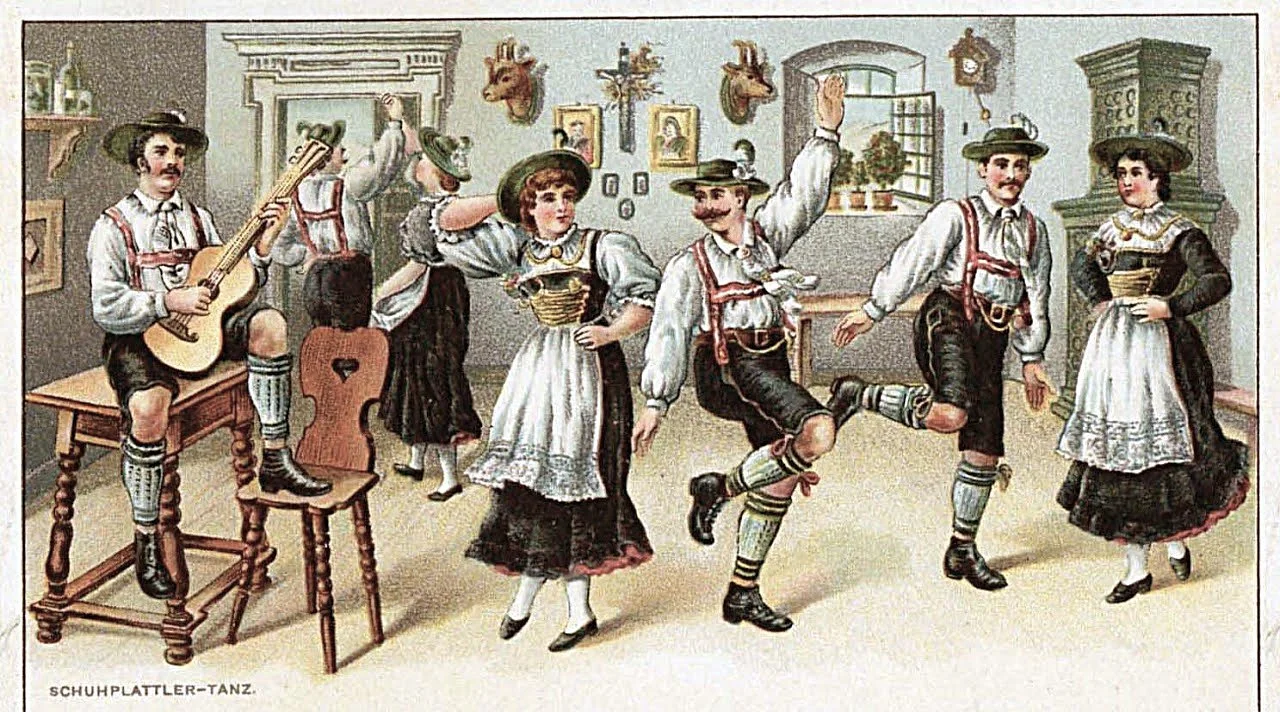
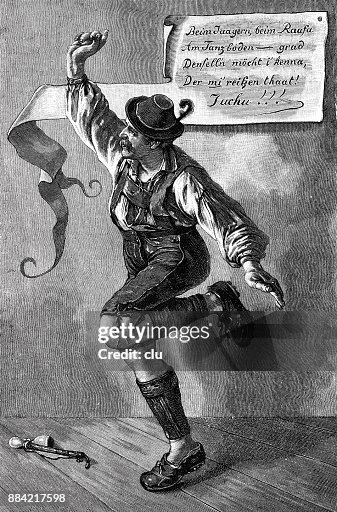
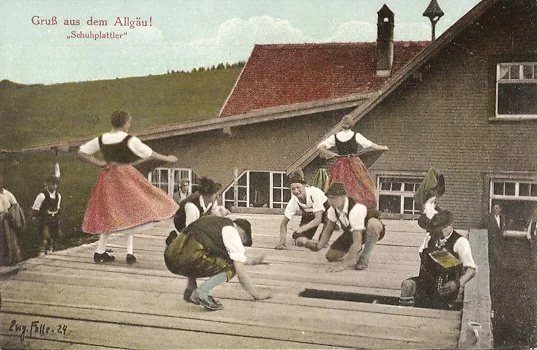
The Schuhplattler certainly belongs to the most characteristic of all Bavarian forms of expression. The word "Schuhplattler" has its origins in the fact that the dancer strikes the soles of his shoes ('Schuhe') with his hands held flat ("platt'). The 'inventors' were simple folk: farmers, hunters, woodsmen. It's difficult to determine the exact origin and history of the dance.
"Ruodlieb", a knight's poem written by a monk at Tegernsee monastery (not far south of Munich) in the year 1050, describes a village dance featuring "leaps and hand gestures" that could actually denote an early form of the Schuhplattler.
From about the mid-1800s onward, the Schuhplattler dance moves became increasingly standardized and "group plattln" came into its own. On July 15, 1858, a Schuhplattler dance was performed in Upper Bavaria on the occasion of King Max II's trip through the Bavarian mountains.
There are about 150 different Schuhplattler dances, and regional differences are evident throughout the areas in which the Schuhplattler is part of the local culture: the Koenigssee in the east to Lake Constance in the west, from the Danube River in the north to the border of Tyrolia in the south. Wherever the dance is performed, it is irrevocably linked with Bavarian tradition and genuine zest for life.
The Dance Evolves
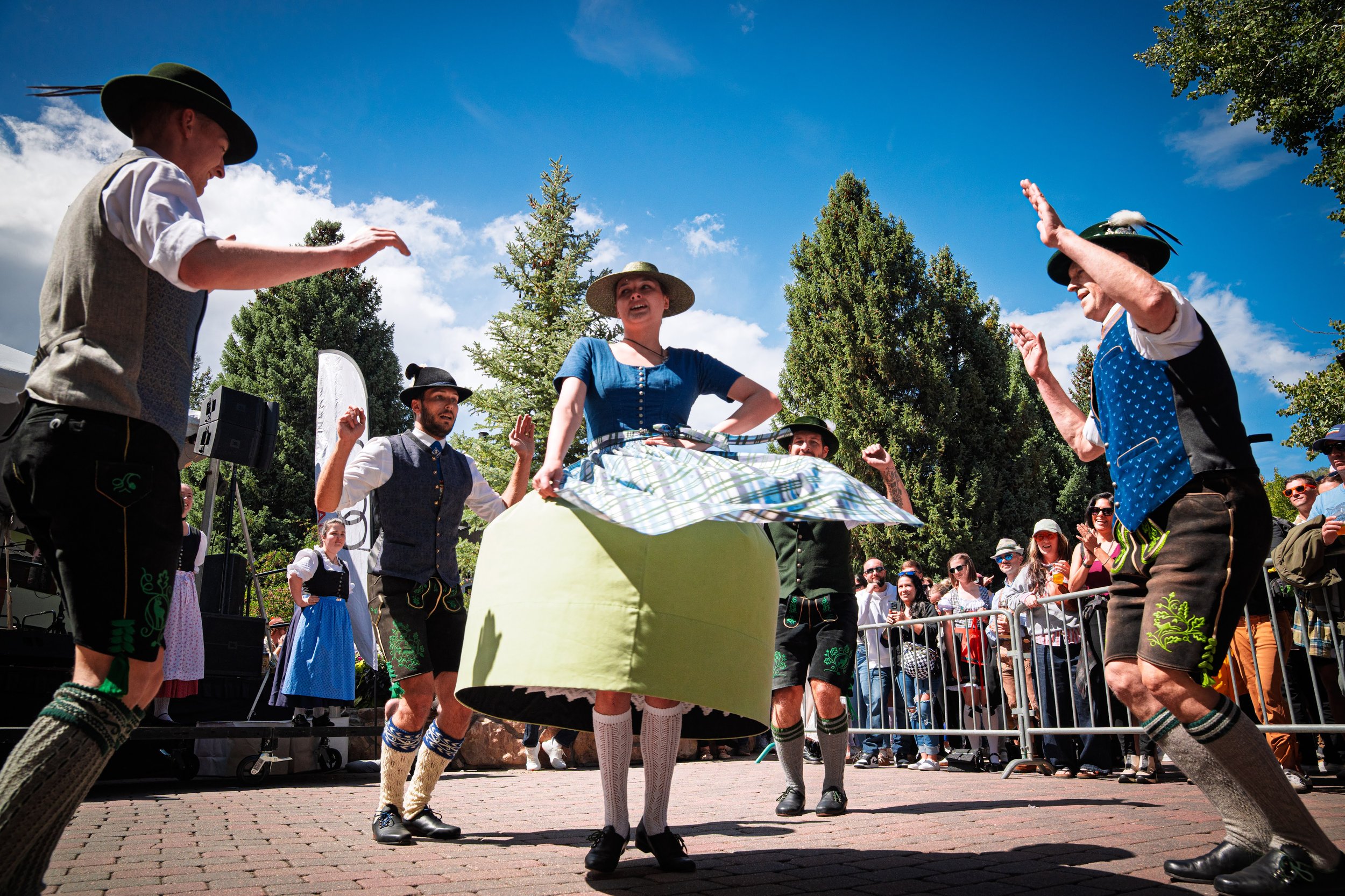
It was later, when the waltz was introduced to the Bavarian region, that women were included in the dance, training to spin so their skirts would form elegant “bell” shapes, and the dance began to form structure.
When the empress of Russia spent time in 1838 at a spa in nearby Wildbad Kreuth, the locals honored her with the performance of a dance that very closely resembled the Schuhplattler. During the dance, the boy was allowed to move however he liked to the melody of a ‘Ländler' folk tune; i.e., he would make figures, leap, stomp, and slap while his girl rotated in time with the music and did not join him until the waltz began. His unregimented, free 'plattling' was known as "Bavarian dancing".
Folktanzes
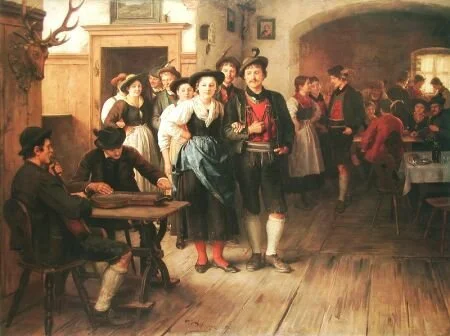
Before the Schuhplattler, folkstanzes (folk dances) were the common form of dance at any engagement in the region. A Folk dance is a form of community dance. Simple dances designed to be taught easily and performed by anyone interested. Festivals throughout the summer feature folk dances in parks and beer gardens, where people are encouraged to learn and dance.
The Dance Today in America
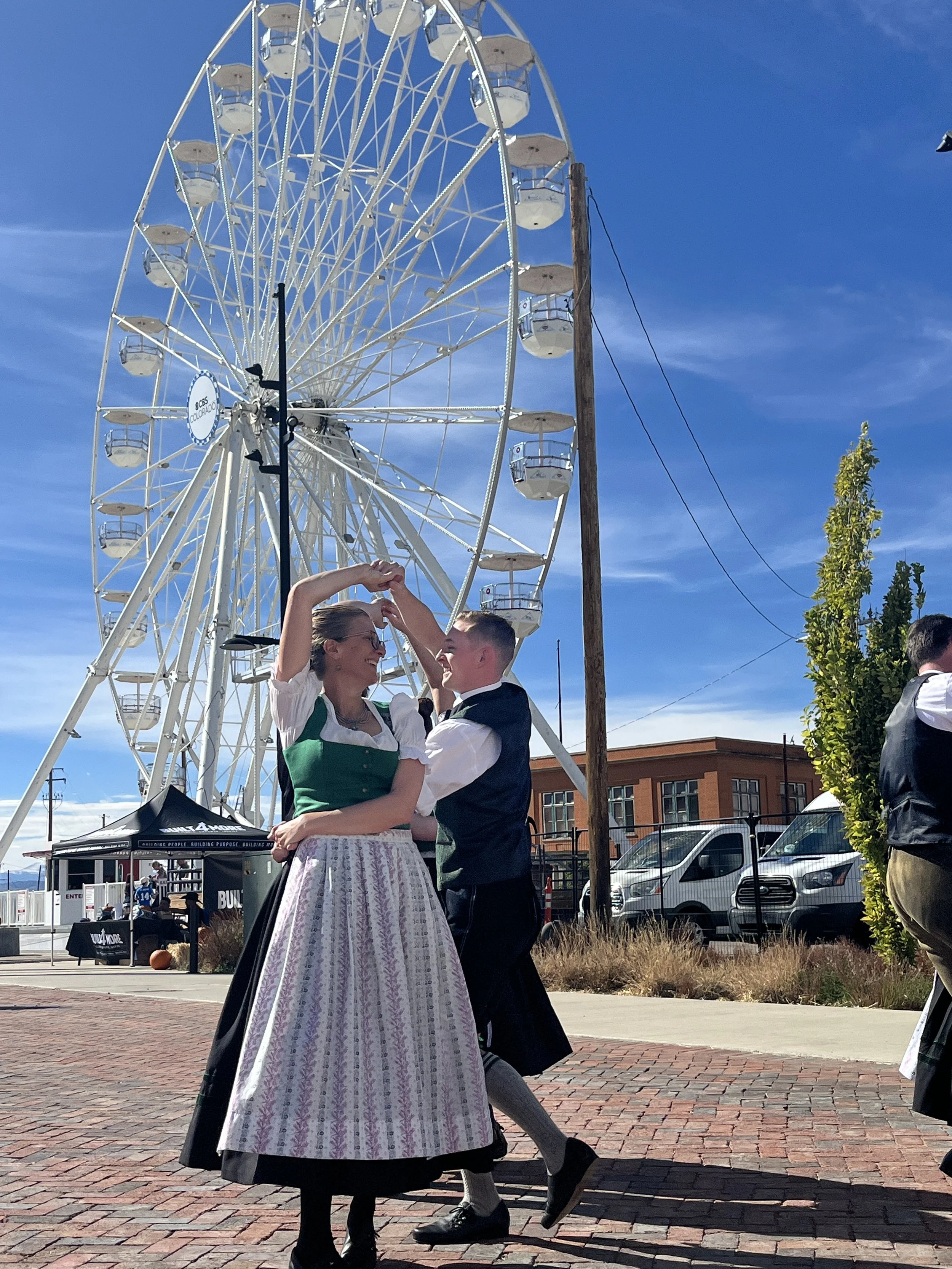
While this tradition began centuries ago, there are still numerous groups that uphold these traditions across the world.
No records can be found to indicate that a Schuhplattler- or Trachtenverein existed in North America before 1914, when Schuhplattler-Verein Edelweiß of Chicago, Illinois, was founded. This Verein, which still exists today, is one of the charter members of the Gauverband Nordamerika. However, between then and World War II, other Vereine formed, and nineteen of these are members of the Gauverband. Before the 1950s, communication among Vereine that were far from one another was practically nonexistent. But as travel means improved, so too did contact among Vereine. Many were celebrating Fahnenweihen (flag blessing celebrations) or reaching milestones such as twenty-fifth or more anniversaries; these were reasons for getting together.
This all led to 1965, when Gauverband Nordamerika was officially formed. The Gauverband is a national organization of German societies which preserves and perpetuates the cultural heritage of Bavaria (Germany) and Tyrol (Austria), including its customs, ethnic costumes, language, folk music, and folk dances. The Gauverband provides member societies in the United States and Canada with educational programs and opportunities for fellowship through conferences, festivals, and published media, and we cultivate ties with heritage societies in Bavaria and Tyrol.
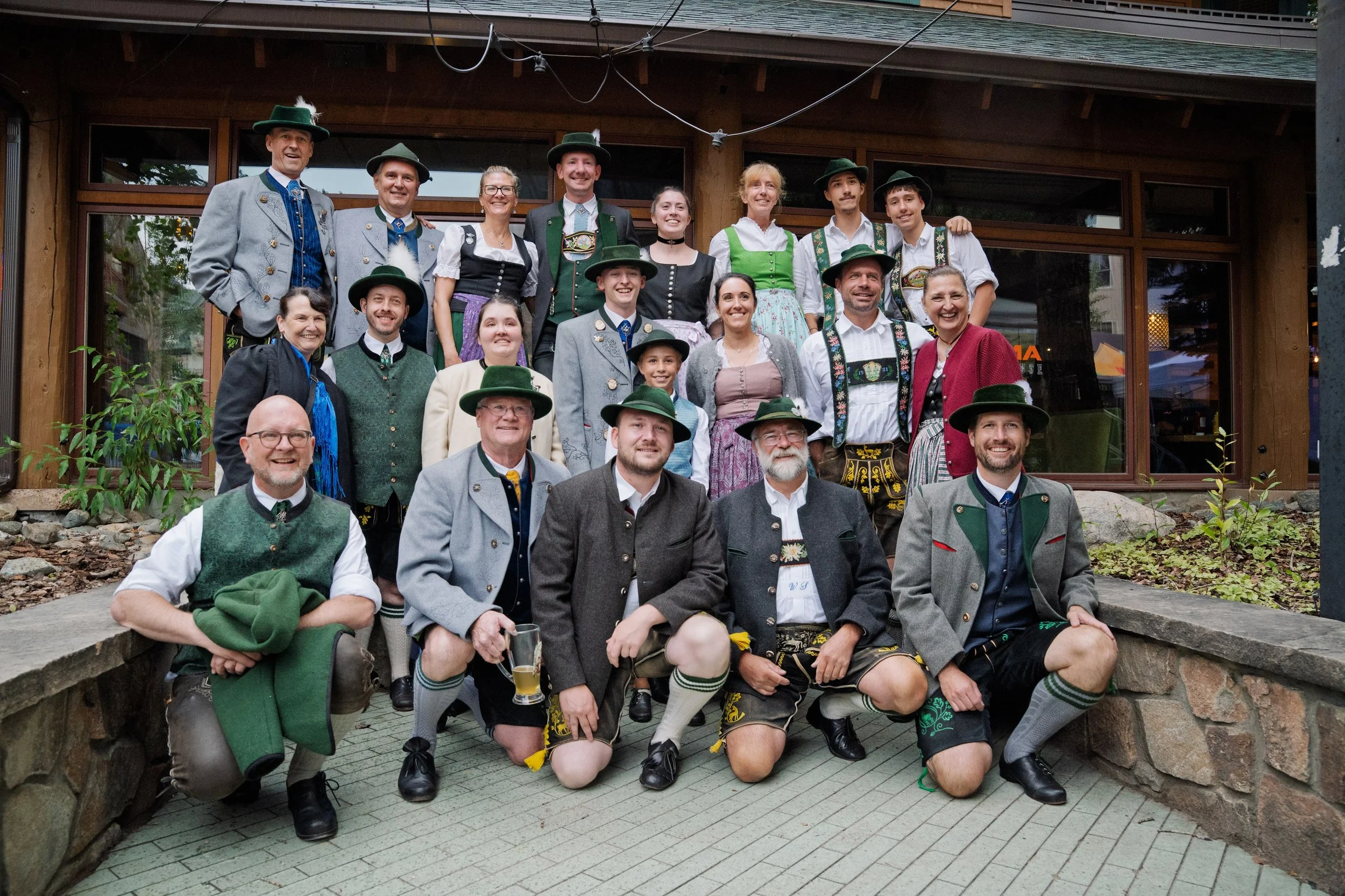
Today, more than 70 Trachtenverein groups (trachten groups) exist and participate in the Gauverband all across the North American region, including Alpen Auerhahn! The Gauverband has ties to numerous groups that still exist in Germany and has provided numerous opportunities to member Vereine that connect them to the history they participate in.

Trachten Vereine
In 1861, a “Gemuetlichkeit Club” was formed in Miesbach (also south of Munich, not far from the Austrian border), which changed its name to the "Schuhplattler Society" in 1866. In 1883, Joseph Vogl founded the "Club for Preservation of Folk Costume in the Leizach Valley" in nearby Bayrischzell, and from that time onward, the phenomenon of regulated Schuhplatteln developed in the folk clubs.
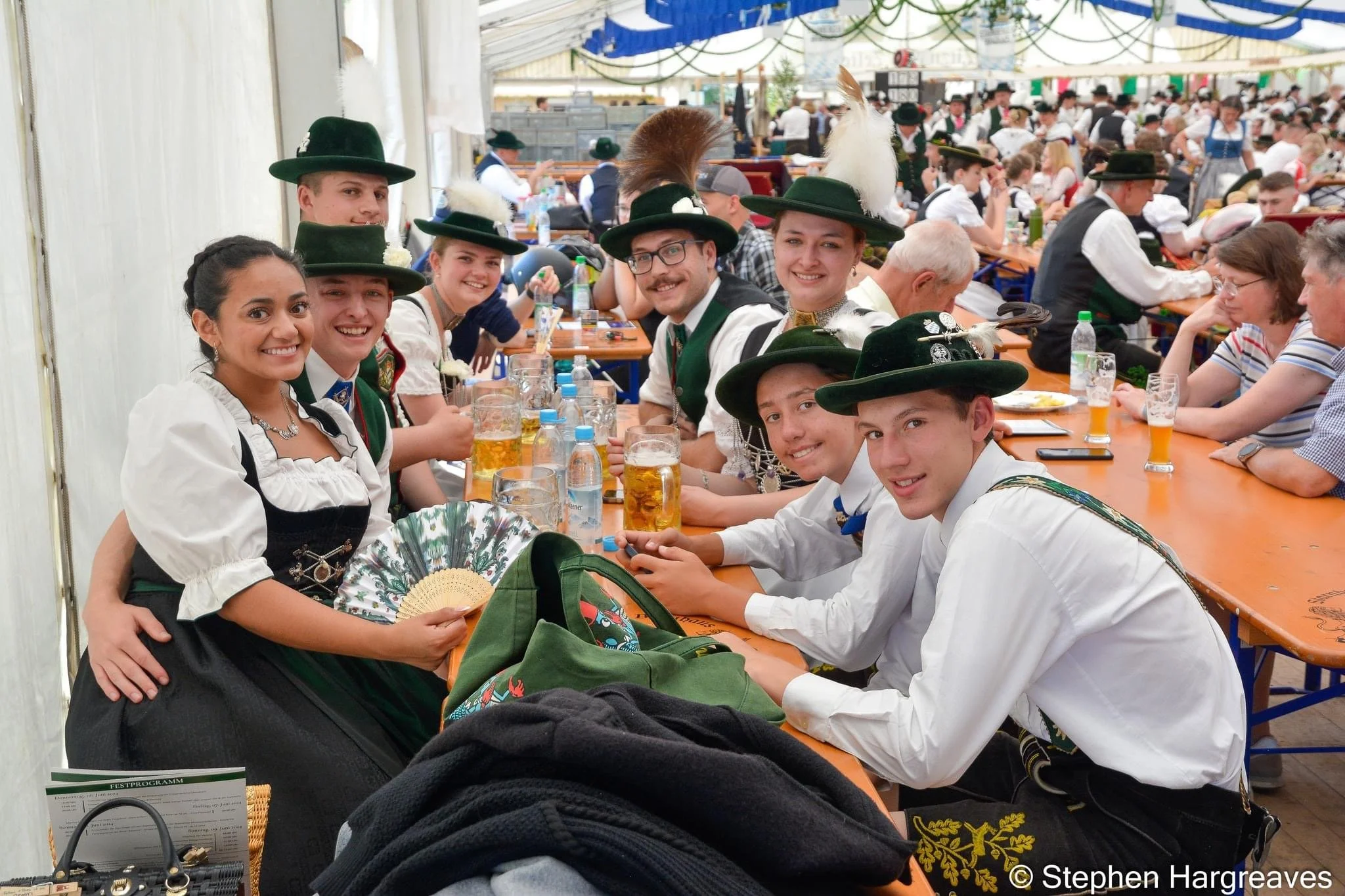
These groups of people became known as “Trachtlers”, from the name of their attire: "Tracht”. These Trachten Vereine (trachten groups) formed all across the Alpine region and have survived ot ths day, each one upholding the traditions of their towns or villages.
Today, thousands of Trachten Vereine exist across the world, with over 70 in the US and Canada, and over 2,000 existing in Germany.
Beyond Dance
Most Trachten Vereine participate in more traditions than just dance, including ours! Other parts of the culture we enjoy learning and participating in include Goaßlschnalzen (rhythmic horse whip cracking), skiing, Vereinsabende (group social nights), language, and more!
Are you interested in participating but not dancing? No worries! There’s something for everyone!